What Business Can Learn from McLaren’s Resurgence and Lando Norris’s World Championship
Introduction: A Triumph Nearly Three Decades in the Making
On 7 December 2025, McLaren returned to the summit of motor racing, securing its first Formula One® Drivers’ and Constructors’ Championship double since 1998. The names on the trophies this time were different, Lando Norris, a driver nurtured from adolescence through McLaren’s development system, and a re-engineered organisation led by CEO Zak Brown and Team Principal Andrea Stella. But the significance was the same: one of the most storied names in motorsport had re-established itself as a benchmark of elite performance.
This victory was not the result of incremental improvement, nor of a single breakthrough technology, nor a stroke of luck in the competitive chaos of Formula One®. It was a deliberate organisational transformation, an archetype of strategic clarity, cultural rejuvenation, courageous leadership, and long-term discipline.
When Zak Brown arrived in late 2016, McLaren was a team famous for its history but paralysed by its present. The Honda partnership had unravelled into public embarrassment; sponsorship deals had dried up; employee morale had cratered. Internally, the leadership structure was fractured and politically charged. McLaren had become a business with world-class talent but no collective direction.
Nearly a decade later, the team stands as a masterclass in how to realign a legacy organisation, breathe life into stagnant culture, re-engage stakeholders, and produce sustained high performance.
For business leaders, the McLaren turnaround offers a rare, comprehensive blueprint: a real-world example of what it means to rebuild an organisation from the inside out - and win.
This article examines five core lessons executives can take from McLaren’s resurgence, drawing from leadership interviews, observed organisational strategy, and the cultural shifts that powered the team from bottom-of-the-grid despair to world championship success.
For the full article and many more, subscribe to our online Knowledge Hub Motorsport To Business®+
What Business Can Learn from McLaren’s Resurgence and Lando Norris’s World Championship
Introduction: A Triumph Nearly Three Decades in the Making
On 7 December 2025, McLaren returned to the summit of motor racing, securing its first Formula One ®Drivers’ and Constructors’ Championship double since 1998. The names on the trophies this time were different, Lando Norris, a driver nurtured from adolescence through McLaren’s development system, and a re-engineered organisation led by CEO Zak Brown and Team Principal Andrea Stella. But the significance was the same: one of the most storied names in motorsport had re-established itself as a benchmark of elite performance.
This victory was not the result of incremental improvement, nor of a single breakthrough technology, nor a stroke of luck in the competitive chaos of Formula One®. It was a deliberate organisational transformation, an archetype of strategic clarity, cultural rejuvenation, courageous leadership, and long-term discipline.
When Zak Brown arrived in late 2016, McLaren was a team famous for its history but paralysed by its present. The Honda partnership had unravelled into public embarrassment; sponsorship deals had dried up; employee morale had cratered. Internally, the leadership structure was fractured and politically charged. McLaren had become a business with world-class talent but no collective direction.
Nearly a decade later, the team stands as a masterclass in how to realign a legacy organisation, breathe life into stagnant culture, re-engage stakeholders, and produce sustained high performance.
For business leaders, the McLaren turnaround offers a rare, comprehensive blueprint: a real-world example of what it means to rebuild an organisation from the inside out - and win.
This article examines five core lessons executives can take from McLaren’s resurgence, drawing from leadership interviews, observed organisational strategy, and the cultural shifts that powered the team from bottom-of-the-grid despair to world championship success.
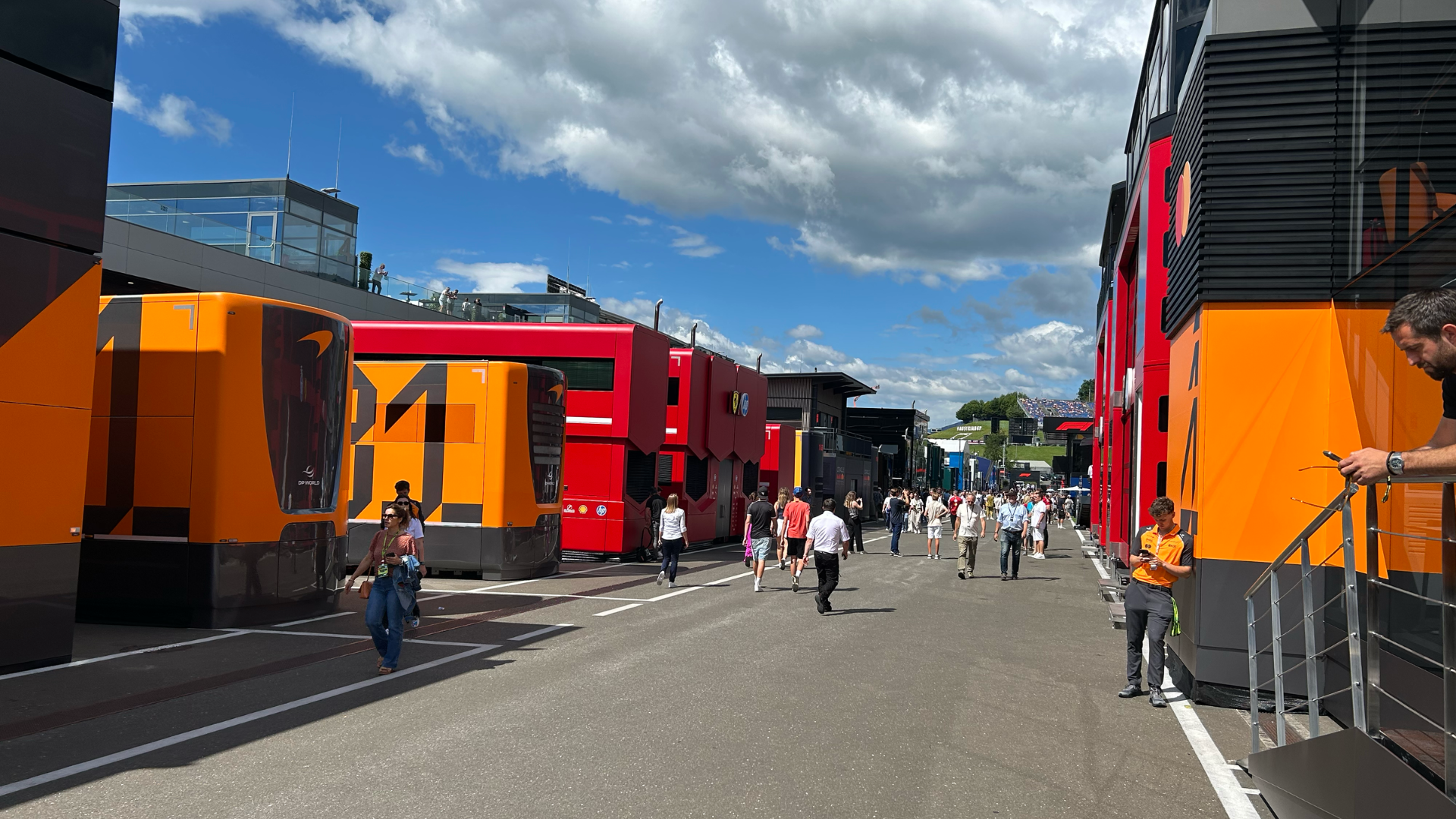
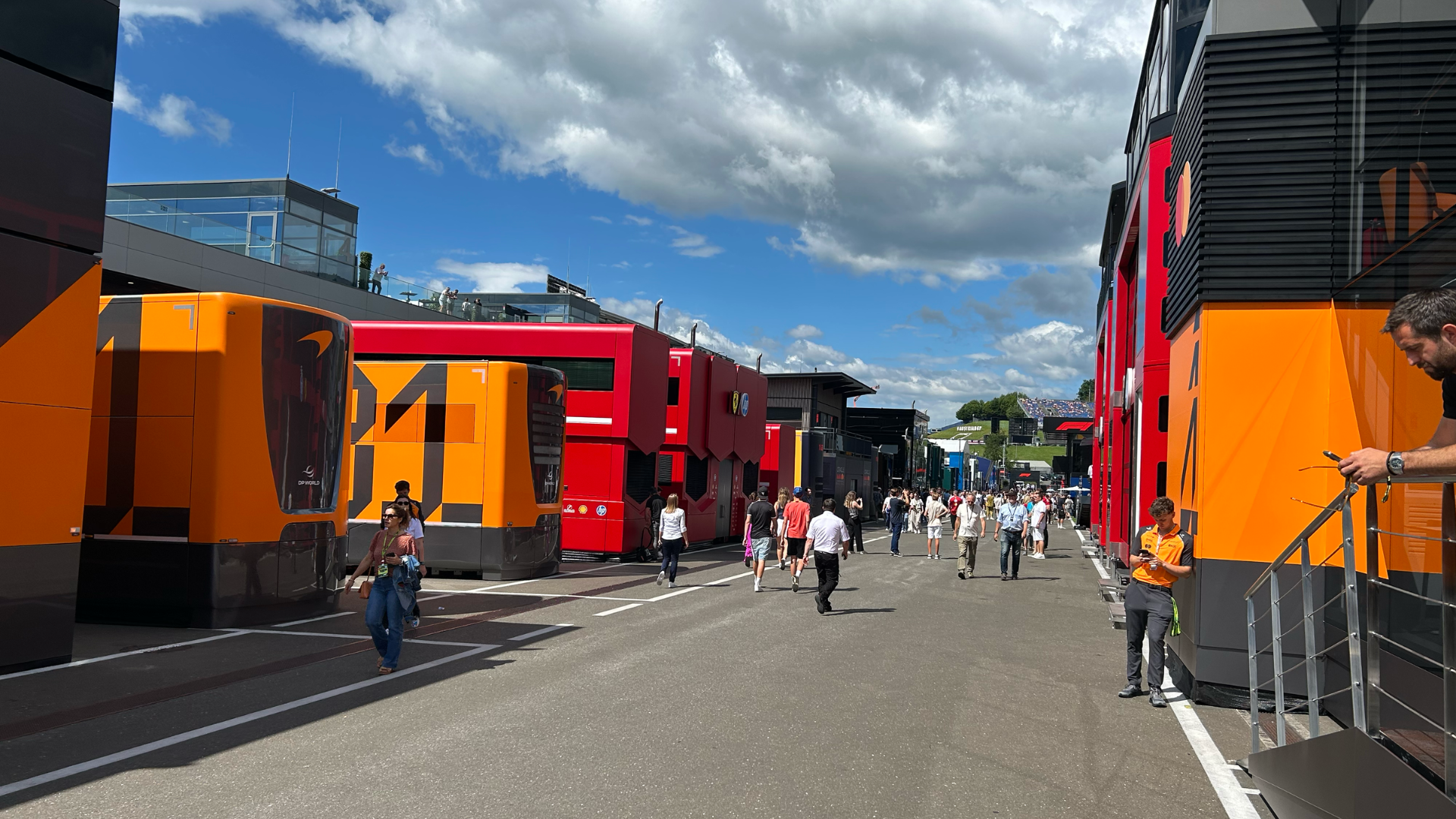
Having won the Constructors Championship twice, McLaren now sit at the top end of the Formula One® paddock (picture: Nick Butcher)
1. Culture as Competitive Advantage: Why People Stay When Others Offer More
When Lando Norris signed contract extensions with McLaren in 2022 and again in early 2024, the decision surprised many inside the paddock. Red Bull, the era’s dominant force, was openly courting him. Other teams had the performance advantage. McLaren, at least on paper, was still a project.
Yet Norris stayed, and in doing so, he became the driving force behind McLaren's championship return.
This raises a fundamental question for businesses:
Why do top performers stay in organisations that haven’t yet peaked?
The answer lies in culture - not as corporate wallpaper but as lived experience.
The Cultural Dividend
Norris’s assessment of his own career situation was strikingly rational. He openly acknowledged doubts. He analysed McLaren’s progress. He considered whether the environment supported his long-term goals. But crucially, he described a workplace where he “enjoyed being part of where I am,” praised the people he worked with, and emphasised the emotional dimension of organisational fit.
His comments reveal an important truth in talent retention: People don’t stay because everything is perfect; they stay because they believe in what the organisation is becoming.
What McLaren offered Norris, and what organisations must offer their top talent, was:
- Clarity of direction - Visible leadership commitment to improvement - A sense of belonging and purpose - Psychological safety and trust - A voice in shaping the organisation’s future
This atmosphere did not happen by accident. It was engineered by leadership decisions around transparency, communication, and empowerment.
A company can pay competitive salaries. It can offer perks, bonuses, and career pathways. But it is culture, the feeling of moving forward together, that convinces top performers to stay when other opportunities arise.
McLaren’s culture ensured that when its performance finally caught up with its ambition, its talent was already in place to seize the moment.
For executives, the lesson is clear: Retain top talent through culture, not contracts.
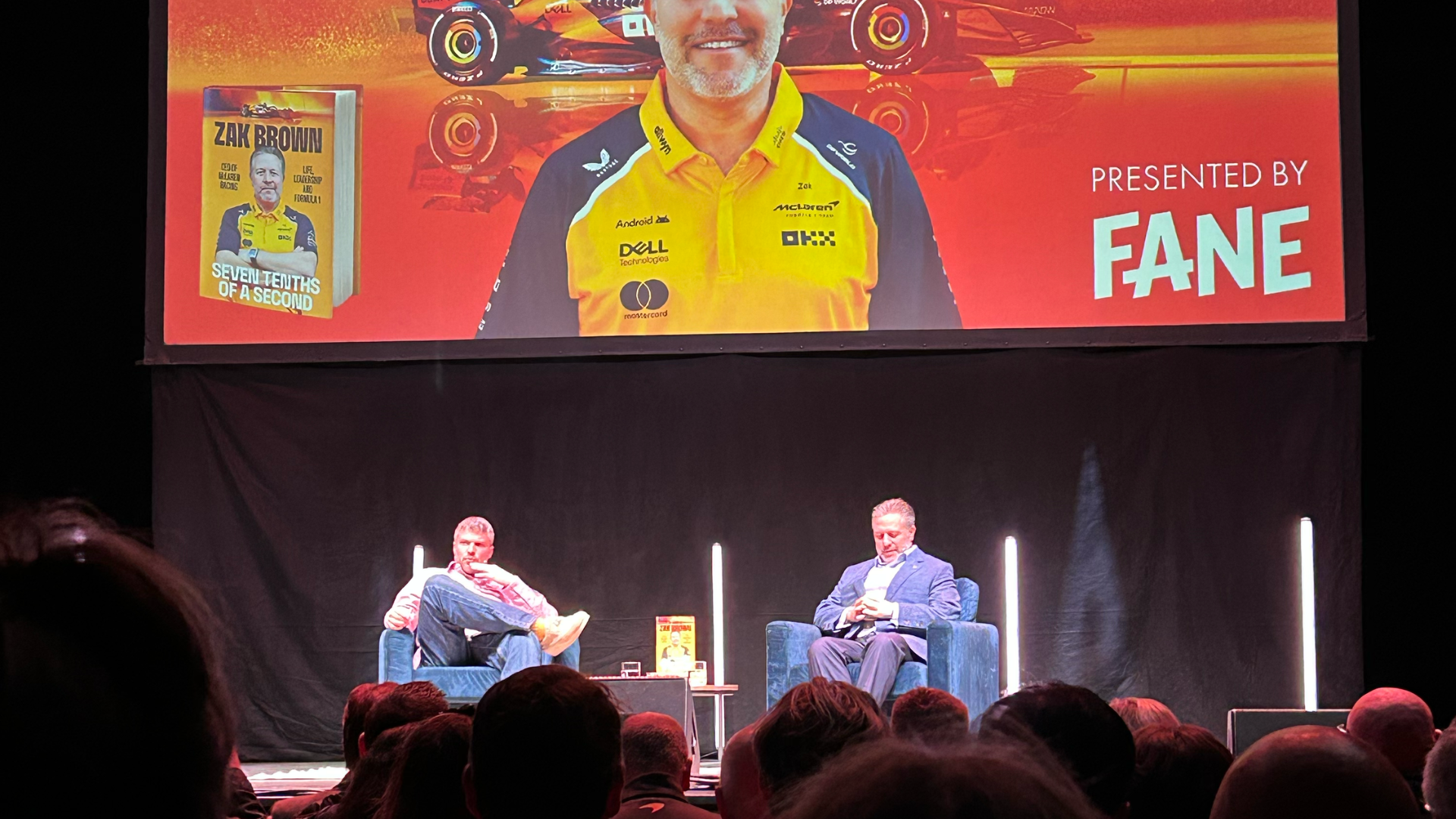
Zak Brown is interviewed about his new book by Rick Edwards at the Hammersmith Apollo (picture: Nick Butcher)
2. Vision Before Execution: Building the Leadership Architecture for Transformation
When Zak Brown walked into the McLaren Technology Centre in 2016, he encountered a situation far more complex than a technical problem or a series of poor results. The organisation was fragmented.
As he later recalled:
“We had an iconic brand with incredible people, but no leadership unity, no shared vision, and no culture guiding us forward.”
Brown’s first insight was one many business leaders overlook: You cannot execute your way out of a strategic vacuum.
Before he replaced engines or hired new designers or restructured departments, he clarified one thing — McLaren needed a vision everyone could focus on.
Diagnosing Dysfunction
McLaren was suffering from what many legacy companies experience:
- Siloed leadership teams - Political decision-making - Misaligned incentives - Unclear organisational priorities - Bureaucratic inertia disguised as tradition
Brown recognised that technical problems were symptoms, not causes. The culture had become risk-averse, internal communication had deteriorated, transparency had vanished, and the organisation lacked shared direction.
Rebuilding the Leadership Spine
One of Brown’s earliest and boldest decisions was to evaluate — and ultimately overhaul — the organisation’s entire leadership layer.
As he put it:
“There isn’t anyone who was on the leadership team then who is on the leadership team today.”
That level of decisiveness is rare. In business contexts, executives often inherit leadership teams and accept them as immovable fixtures. Brown did not. He rebuilt the team based on:
- Shared language - Shared pace - Shared values - Complementary expertise - Mutual trust
He made two equally important moves:
1. Promoted internal talent - People with high capability but previously limited influence 2. Imported external perspectives - Leaders from industries like football, aviation, and technology, sectors known for fast decision-making and operational complexity
The result was a leadership team that:
- Challenged old assumptions - Encouraged innovation - Rebuilt internal communication - Drove accountability - Reoriented the organisation around performance
This is a central leadership lesson:
- Strategy collapses when the leadership team is misaligned. - Culture collapses when the leadership team is inconsistent. - Performance collapses when the leadership team lacks courage.
McLaren fixed all three by building the right leadership architecture first - before expecting results.
McLaren driver Oscar Piastri is interviewed in the McLaren motorhome (picture: Nick Butcher)
3. The Discipline to Change: Why Courageous Decisions Unlock Hidden Performance
By early 2023, McLaren launched its Formula One® car with a warning: expectations should be low. They had identified aerodynamic inefficiencies and structural weaknesses that couldn't be solved before the season began.
It was a moment of brutal honesty - a trait that would become foundational to their transformation.
Despite limited performance, something remarkable happened that year: McLaren changed faster than any other team.
Team Principal Andrea Stella introduced new structures, accountability frameworks, decision-making pathways, and technical oversight. Senior aerodynamic leadership was reshaped. Technical groups were reorganised. McLaren also accelerated the opening of its new wind tunnel - a tool it had spent more than a decade without.
But most importantly, the organisation normalised difficult conversations.
Normalising Candour
Zak Brown summed this up succinctly:
“In 2023 we had the second-worst car. Same people, same wind tunnel, but we changed leadership and culture — and suddenly the results came.”
What changed was not the raw talent in the building, but the freedom to:
- Address underperformance without blame - Admit mistakes without fear - Innovate without penalty - Challenge assumptions without friction
These cultural traits - candour, transparency, debate - are hallmarks of high-performance organisations.
In Formula One®, milliseconds matter. In business, market shifts matter.
The organisations that adapt fastest win.
McLaren demonstrated the value of structural courage:
- Courage to reorganise - Courage to promote differently - Courage to remove bottlenecks - Courage to abandon processes that no longer worked - Courage to act now rather than wait for the “right time”
The lesson is bold but essential: If you want performance breakthroughs, you must be willing to break things.
Organisations that cling to comfortable dysfunction never improve. Those that pursue disciplined change find their latent potential.
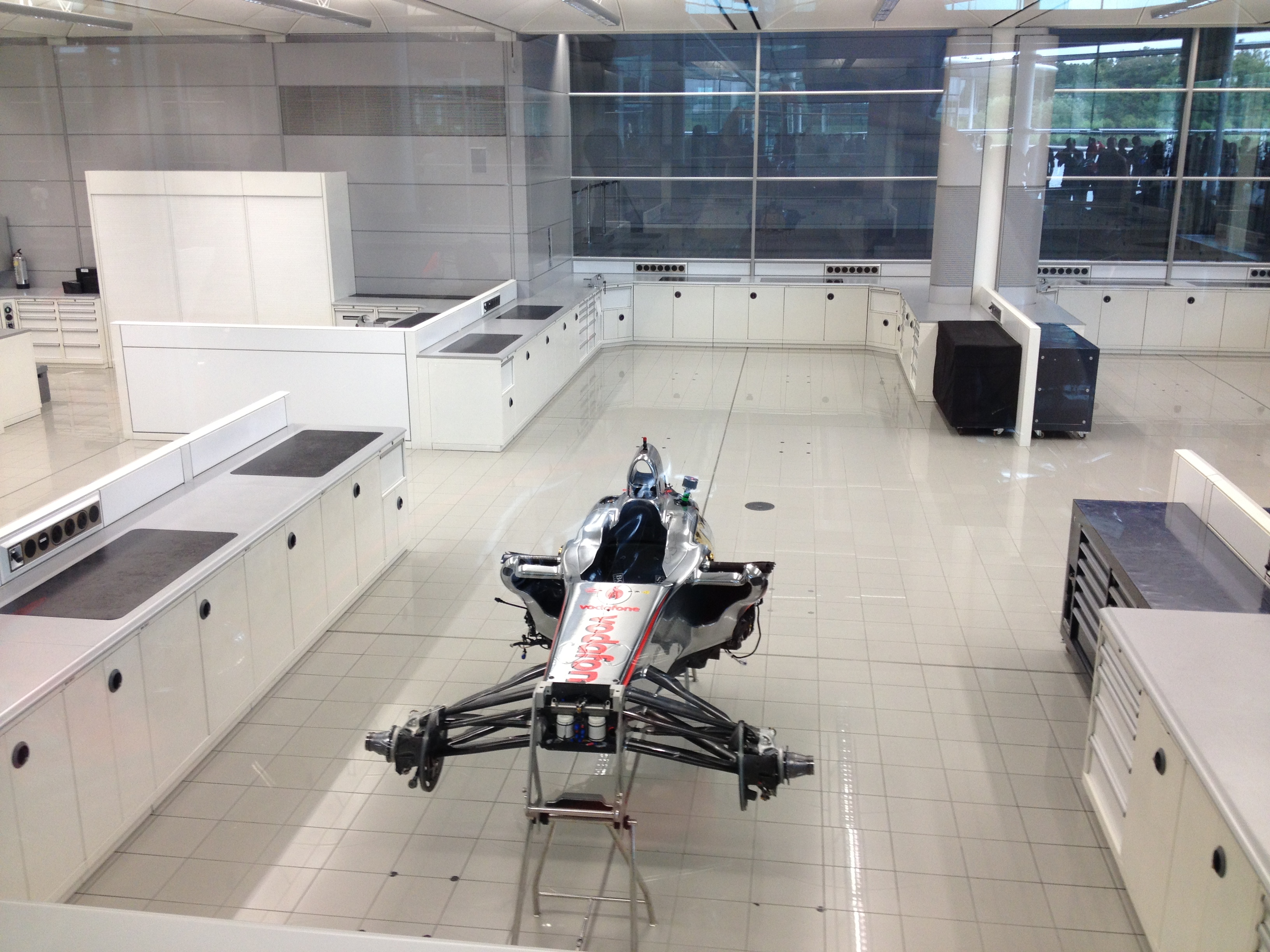
The MTC is home to the McLaren team (photo: Nick Butcher)
4. The Power of Engagement: Rebuilding Trust with Customers, Stakeholders, and Fans
For years, McLaren had drifted away from the public and its partners. The brand remained glamorous, but emotionally distant. Engagement had faded, communication had thinned, and fans felt disconnected.
One of Zak Brown’s quietest yet most transformative strategies was rekindling relationships:
- With fans - With partners - With the media - With McLaren’s own history
Restoring Identity
The return to McLaren’s heritage Papaya Orange livery wasn’t cosmetic. It was symbolic, a statement of rediscovered identity. Fans immediately reconnected. Merchandise sales grew. Commercial partners enjoyed greater resonance. The organisation rediscovered its roots.
McLaren then transformed its digital and fan engagement strategy:
- Open access through social media - Behind-the-scenes content - Direct communication from leadership - Humour, authenticity, and brand personality
The team modernised without losing its heritage - a balance few companies manage successfully.
Internally, employees noticed the difference. Externally, fans felt valued. Commercial partners - previously “grumpy,” as Brown recalled - now saw McLaren as an active, collaborative brand.
This underscores a central business truth: Customers can forgive poor performance; they rarely forgive poor engagement.
Engagement builds resilience.
It creates a community that stays loyal during downturns and becomes evangelistic during success. For McLaren, fan and partner engagement created a supportive ecosystem that elevated the team’s confidence and commercial strength.
For your organisation, it is a reminder that engagement - real engagement - is strategic, not cosmetic.
A one off retro inspired livery at Silverstone shows how McLaren engages with both its fans and partners (picture: Nick Butcher)
5. Values as Navigational Tools: The Importance of Staying True to Purpose
Throughout McLaren’s most turbulent years, one thing remained consistent: its values.
Even when the team suffered on track, struggled commercially, and faced leadership turnover, McLaren’s commitment to its core principles never wavered:
Values are easy to reference in times of success but hardest to maintain during failure. McLaren’s recovery was not a reinvention of purpose, but a return to alignment with the values that shaped its greatest eras.
In business, mid-crisis organisations often face a crossroads:
Abandon values in pursuit of short-term results or double down on values to drive long-term transformation
McLaren chose the latter.
Values in Action
Values weren’t treated as platitudes. They were embedded into:
- Hiring decisions - Leadership appointments - Technical strategy - Partnerships - Cultural behaviours - Communication norms
When Norris considered leaving, it was the organisational character, not just the car that kept him. When new leaders joined from aviation and football, it was the cultural consistency that convinced them the project was worth committing to.
Values acted as the compass guiding every decision, big and small.
In business, values become operationally meaningful when:
They shape resource allocation They influence who gets promoted They set expectations for leadership behaviour They guide difficult decisions when trade-offs arise
McLaren’s return to championship status is proof that values are not decorative. They are directional.
Conclusion: McLaren as a Blueprint for Organisational Renewal
McLaren’s resurgence from one of its darkest eras to world champions is not just a sports story - it is a case study in strategic transformation.
The core lessons for business are clear:
1. Culture attracts and retains elite talent.
People stay where they believe in the mission and feel valued in the process.
2. Vision and leadership alignment are prerequisites for performance.
Strategy fails without the right people driving it.
3. Change requires courage, candour, and willingness to disrupt the status quo.
McLaren did not simply return to the top of Formula One®. They rebuilt themselves into an organisation capable of staying there.
And for leaders in any industry, that journey offers a powerful reminder:
High performance is never the product of technical excellence alone. It is the result of people, culture, vision, and values - aligned, empowered, and moving as one.
What Business Can Learn from McLaren’s Resurgence and Lando Norris’s World Championship
Introduction: A Triumph Nearly Three Decades in the Making
On 7 December 2025, McLaren returned to the summit of motor racing, securing its first Formula One ®Drivers’ and Constructors’ Championship double since 1998. The names on the trophies this time were different, Lando Norris, a driver nurtured from adolescence through McLaren’s development system, and a re-engineered organisation led by CEO Zak Brown and Team Principal Andrea Stella. But the significance was the same: one of the most storied names in motorsport had re-established itself as a benchmark of elite performance.
This victory was not the result of incremental improvement, nor of a single breakthrough technology, nor a stroke of luck in the competitive chaos of Formula One®. It was a deliberate organisational transformation, an archetype of strategic clarity, cultural rejuvenation, courageous leadership, and long-term discipline.
When Zak Brown arrived in late 2016, McLaren was a team famous for its history but paralysed by its present. The Honda partnership had unravelled into public embarrassment; sponsorship deals had dried up; employee morale had cratered. Internally, the leadership structure was fractured and politically charged. McLaren had become a business with world-class talent but no collective direction.
Nearly a decade later, the team stands as a masterclass in how to realign a legacy organisation, breathe life into stagnant culture, re-engage stakeholders, and produce sustained high performance.
For business leaders, the McLaren turnaround offers a rare, comprehensive blueprint: a real-world example of what it means to rebuild an organisation from the inside out - and win.
This article examines five core lessons executives can take from McLaren’s resurgence, drawing from leadership interviews, observed organisational strategy, and the cultural shifts that powered the team from bottom-of-the-grid despair to world championship success.
Having won the Constructors Championship twice, McLaren now sit at the top end of the Formula One® paddock (picture: Nick Butcher)
1. Culture as Competitive Advantage: Why People Stay When Others Offer More
When Lando Norris signed contract extensions with McLaren in 2022 and again in early 2024, the decision surprised many inside the paddock. Red Bull, the era’s dominant force, was openly courting him. Other teams had the performance advantage. McLaren, at least on paper, was still a project.
Yet Norris stayed, and in doing so, he became the driving force behind McLaren's championship return.
This raises a fundamental question for businesses:
Why do top performers stay in organisations that haven’t yet peaked?
The answer lies in culture - not as corporate wallpaper but as lived experience.
The Cultural Dividend
Norris’s assessment of his own career situation was strikingly rational. He openly acknowledged doubts. He analysed McLaren’s progress. He considered whether the environment supported his long-term goals. But crucially, he described a workplace where he “enjoyed being part of where I am,” praised the people he worked with, and emphasised the emotional dimension of organisational fit.
His comments reveal an important truth in talent retention: People don’t stay because everything is perfect; they stay because they believe in what the organisation is becoming.
What McLaren offered Norris, and what organisations must offer their top talent, was:
- Clarity of direction - Visible leadership commitment to improvement - A sense of belonging and purpose - Psychological safety and trust - A voice in shaping the organisation’s future
This atmosphere did not happen by accident. It was engineered by leadership decisions around transparency, communication, and empowerment.
A company can pay competitive salaries. It can offer perks, bonuses, and career pathways. But it is culture, the feeling of moving forward together, that convinces top performers to stay when other opportunities arise.
McLaren’s culture ensured that when its performance finally caught up with its ambition, its talent was already in place to seize the moment.
For executives, the lesson is clear: Retain top talent through culture, not contracts.
Zak Brown is interviewed about his new book by Rick Edwards at the Hammersmith Apollo (picture: Nick Butcher)
2. Vision Before Execution: Building the Leadership Architecture for Transformation
When Zak Brown walked into the McLaren Technology Centre in 2016, he encountered a situation far more complex than a technical problem or a series of poor results. The organisation was fragmented.
As he later recalled:
“We had an iconic brand with incredible people, but no leadership unity, no shared vision, and no culture guiding us forward.”
Brown’s first insight was one many business leaders overlook: You cannot execute your way out of a strategic vacuum.
Before he replaced engines or hired new designers or restructured departments, he clarified one thing — McLaren needed a vision everyone could focus on.
Diagnosing Dysfunction
McLaren was suffering from what many legacy companies experience:
- Siloed leadership teams - Political decision-making - Misaligned incentives - Unclear organisational priorities - Bureaucratic inertia disguised as tradition
Brown recognised that technical problems were symptoms, not causes. The culture had become risk-averse, internal communication had deteriorated, transparency had vanished, and the organisation lacked shared direction.
Rebuilding the Leadership Spine
One of Brown’s earliest and boldest decisions was to evaluate — and ultimately overhaul — the organisation’s entire leadership layer.
As he put it:
“There isn’t anyone who was on the leadership team then who is on the leadership team today.”
That level of decisiveness is rare. In business contexts, executives often inherit leadership teams and accept them as immovable fixtures. Brown did not. He rebuilt the team based on:
- Shared language - Shared pace - Shared values - Complementary expertise - Mutual trust
He made two equally important moves:
1. Promoted internal talent - People with high capability but previously limited influence 2. Imported external perspectives - Leaders from industries like football, aviation, and technology, sectors known for fast decision-making and operational complexity
The result was a leadership team that:
- Challenged old assumptions - Encouraged innovation - Rebuilt internal communication - Drove accountability - Reoriented the organisation around performance
This is a central leadership lesson:
- Strategy collapses when the leadership team is misaligned. - Culture collapses when the leadership team is inconsistent. - Performance collapses when the leadership team lacks courage.
McLaren fixed all three by building the right leadership architecture first - before expecting results.
McLaren driver Oscar Piastri is interviewed in the McLaren motorhome (picture: Nick Butcher)
3. The Discipline to Change: Why Courageous Decisions Unlock Hidden Performance
By early 2023, McLaren launched its Formula One® car with a warning: expectations should be low. They had identified aerodynamic inefficiencies and structural weaknesses that couldn't be solved before the season began.
It was a moment of brutal honesty - a trait that would become foundational to their transformation.
Despite limited performance, something remarkable happened that year: McLaren changed faster than any other team.
Team Principal Andrea Stella introduced new structures, accountability frameworks, decision-making pathways, and technical oversight. Senior aerodynamic leadership was reshaped. Technical groups were reorganised. McLaren also accelerated the opening of its new wind tunnel - a tool it had spent more than a decade without.
But most importantly, the organisation normalised difficult conversations.
Normalising Candour
Zak Brown summed this up succinctly:
“In 2023 we had the second-worst car. Same people, same wind tunnel, but we changed leadership and culture — and suddenly the results came.”
What changed was not the raw talent in the building, but the freedom to:
- Address underperformance without blame - Admit mistakes without fear - Innovate without penalty - Challenge assumptions without friction
These cultural traits - candour, transparency, debate - are hallmarks of high-performance organisations.
In Formula One®, milliseconds matter. In business, market shifts matter.
The organisations that adapt fastest win.
McLaren demonstrated the value of structural courage:
- Courage to reorganise - Courage to promote differently - Courage to remove bottlenecks - Courage to abandon processes that no longer worked - Courage to act now rather than wait for the “right time”
The lesson is bold but essential: If you want performance breakthroughs, you must be willing to break things.
Organisations that cling to comfortable dysfunction never improve. Those that pursue disciplined change find their latent potential.
The MTC is home to the McLaren team (photo: Nick Butcher)
4. The Power of Engagement: Rebuilding Trust with Customers, Stakeholders, and Fans
For years, McLaren had drifted away from the public and its partners. The brand remained glamorous, but emotionally distant. Engagement had faded, communication had thinned, and fans felt disconnected.
One of Zak Brown’s quietest yet most transformative strategies was rekindling relationships:
- With fans - With partners - With the media - With McLaren’s own history
Restoring Identity
The return to McLaren’s heritage Papaya Orange livery wasn’t cosmetic. It was symbolic, a statement of rediscovered identity. Fans immediately reconnected. Merchandise sales grew. Commercial partners enjoyed greater resonance. The organisation rediscovered its roots.
McLaren then transformed its digital and fan engagement strategy:
- Open access through social media - Behind-the-scenes content - Direct communication from leadership - Humour, authenticity, and brand personality
The team modernised without losing its heritage - a balance few companies manage successfully.
Internally, employees noticed the difference. Externally, fans felt valued. Commercial partners - previously “grumpy,” as Brown recalled - now saw McLaren as an active, collaborative brand.
This underscores a central business truth: Customers can forgive poor performance; they rarely forgive poor engagement.
Engagement builds resilience.
It creates a community that stays loyal during downturns and becomes evangelistic during success. For McLaren, fan and partner engagement created a supportive ecosystem that elevated the team’s confidence and commercial strength.
For your organisation, it is a reminder that engagement - real engagement - is strategic, not cosmetic.
A one off retro inspired livery at Silverstone shows how McLaren engages with both its fans and partners (picture: Nick Butcher)
5. Values as Navigational Tools: The Importance of Staying True to Purpose
Throughout McLaren’s most turbulent years, one thing remained consistent: its values.
Even when the team suffered on track, struggled commercially, and faced leadership turnover, McLaren’s commitment to its core principles never wavered:
Values are easy to reference in times of success but hardest to maintain during failure. McLaren’s recovery was not a reinvention of purpose, but a return to alignment with the values that shaped its greatest eras.
In business, mid-crisis organisations often face a crossroads:
Abandon values in pursuit of short-term results or double down on values to drive long-term transformation
McLaren chose the latter.
Values in Action
Values weren’t treated as platitudes. They were embedded into:
- Hiring decisions - Leadership appointments - Technical strategy - Partnerships - Cultural behaviours - Communication norms
When Norris considered leaving, it was the organisational character, not just the car that kept him. When new leaders joined from aviation and football, it was the cultural consistency that convinced them the project was worth committing to.
Values acted as the compass guiding every decision, big and small.
In business, values become operationally meaningful when:
They shape resource allocation They influence who gets promoted They set expectations for leadership behaviour They guide difficult decisions when trade-offs arise
McLaren’s return to championship status is proof that values are not decorative. They are directional.
Conclusion: McLaren as a Blueprint for Organisational Renewal
McLaren’s resurgence from one of its darkest eras to world champions is not just a sports story - it is a case study in strategic transformation.
The core lessons for business are clear:
1. Culture attracts and retains elite talent.
People stay where they believe in the mission and feel valued in the process.
2. Vision and leadership alignment are prerequisites for performance.
Strategy fails without the right people driving it.
3. Change requires courage, candour, and willingness to disrupt the status quo.
McLaren did not simply return to the top of Formula One®. They rebuilt themselves into an organisation capable of staying there.
And for leaders in any industry, that journey offers a powerful reminder:
High performance is never the product of technical excellence alone. It is the result of people, culture, vision, and values - aligned, empowered, and moving as one.




.jpeg)














.png)
.png)
.png)
.png)